
My outdoor adventures started aged 14 in Hunua and Tongariro. Our walking trips are a great way to combine my interests in the outdoors, birds, photography and travel.
— Fiona Mckinney
My first independent walk happened in 1961. I walked on my own from Sopot to Gdynia. Quite a memorable adventure for a five-year-old boy. And I am still enjoying all forms of walks.
— Karol Wojasz
© 2026 McWoyage. All rights reserved.
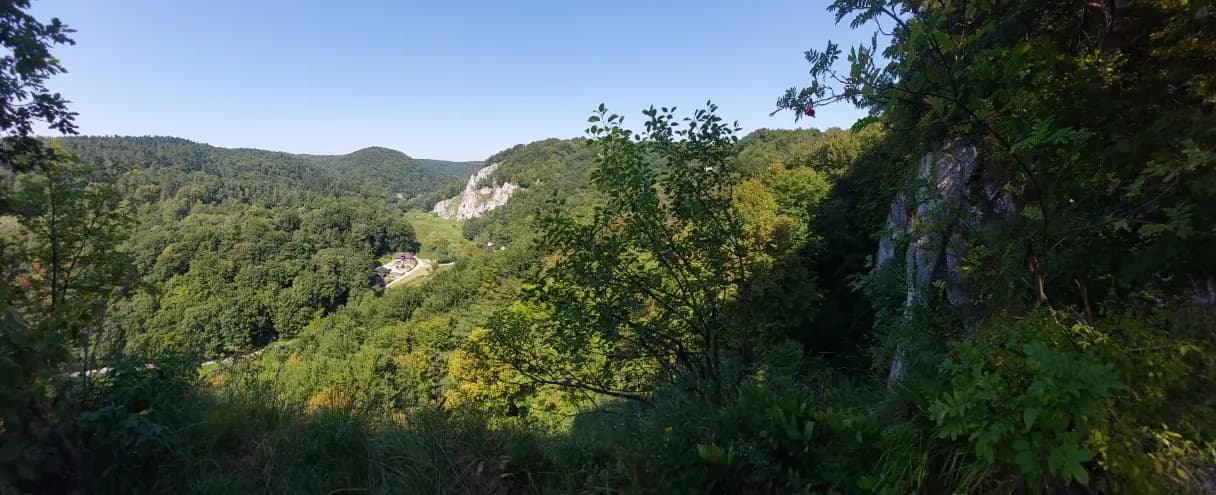
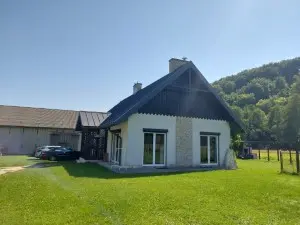
After our wonderful 2023 adventure in the Karkonosze Mountains with Cathryn, Leszek, Jane, and Bogdan, it didn’t take much convincing to plan another trip together. Jane once again worked her magic and found us a fantastic place to stay — no small feat during Poland’s long Assumption Day weekend! The getaway turned out to be the perfect mix of catching up with our Polish-Kiwi friends, sharing family news, and indulging in our usual rituals: a few lively rounds of Trivial Pursuit, a few bottles of wine (perhaps more than planned), and plenty of late-night debates about how to fix the world — while possibly creating a few new problems along the way. We also managed to explore another corner of Poland we hadn’t yet seen, adding fresh memories to our growing list of shared adventures. Most importantly, we kept up our much-loved tradition of spending time together whenever life gives us the chance.
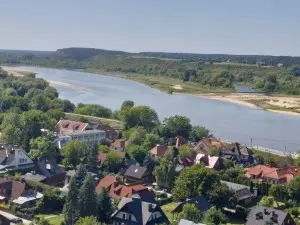
12-Aug-2025 to 14-Aug-2025
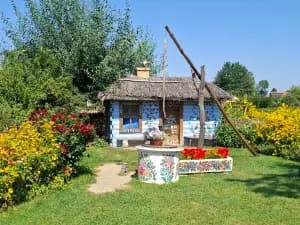
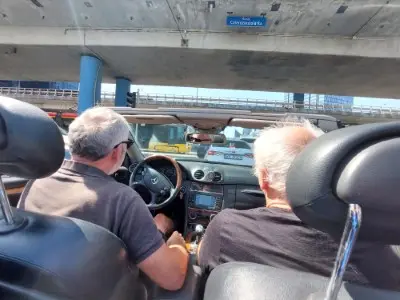
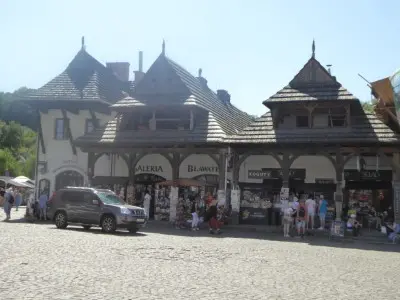
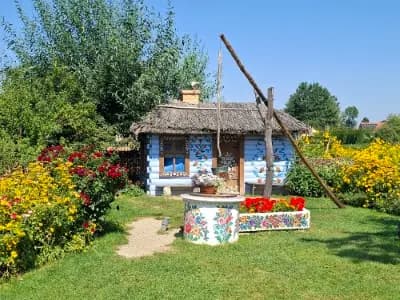
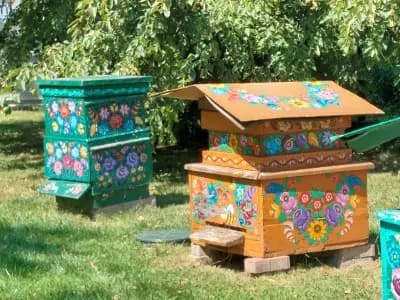
We spent two wonderful days with Jane and Bogdan before setting off together from Warsaw toward Dolina Prądnika. From the moment we arrived, Jane and Bogdan made sure we didn’t waste a minute. That first afternoon, they whisked us away for a short walk around leafy Konstancin, a lovely way to shake off the travel fatigue. The next day was even better - a trip to Kazimierz Dolny, a charming historic town on the Vistula River. Once an important trading hub in Lesser Poland, today it’s full of cobbled streets, old merchant houses, and an easy-going atmosphere that makes you want to linger. Jane was the perfect organiser. She had every detail planned - snacks packed, routes mapped, and even a detour added to our itinerary: Zalipie, the village famous for its hand-painted cottages. Bogdan took the wheel like a pro, calmly guiding us through winding country roads and pointing out little local curiosities as we went. Our visit to Zalipie was a real highlight. We stopped for lunch at Dom Malarek, where we ate under a shady wooden pergola - the kind of peaceful spot you never want to leave. Afterwards, we wandered through the village, peeking at the colourful houses painted with bright floral designs. Each wall looked like a piece of art, turning the whole village into an open-air gallery. We didn’t have quite enough time to visit the Zagroda Felicji Curyłowej, the best-known of the painted houses, which gave us a good excuse to plan another visit. The rest of the journey went smoothly, the countryside rolling by in shades of green and gold. We arrived at our lodge just after Kasia and Leszek, pleasantly tired but very happy. The day ended perfectly - with a cosy dinner, a few glasses of wine, and the kind of easy conversation that makes travelling with friends such a joy.
15-Aug-2025
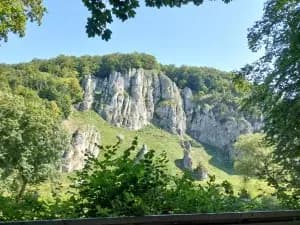
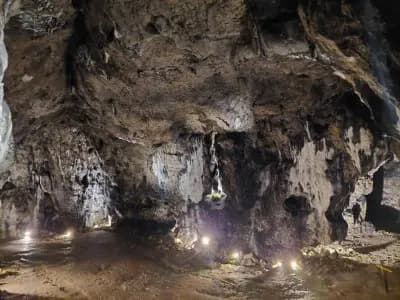
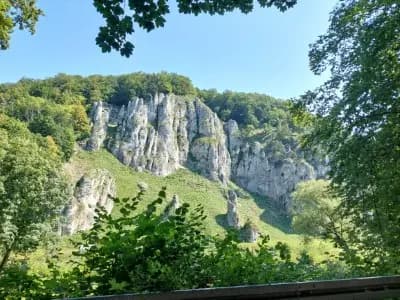
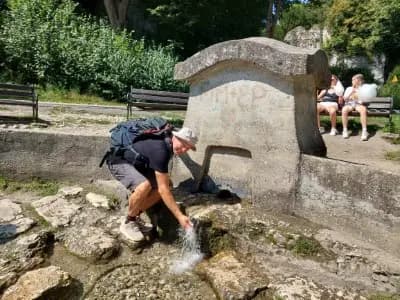
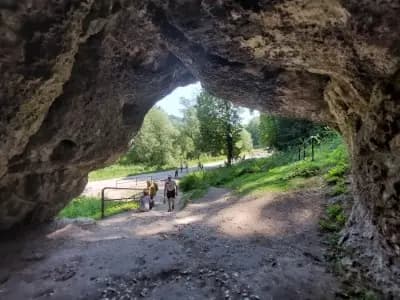
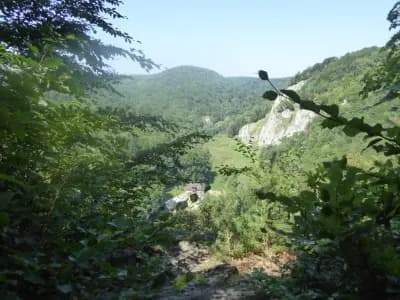
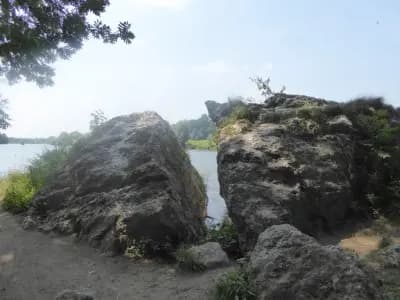
Our day’s adventure began with a visit to Jaskinia Łokietka, a cave steeped in history and legend. The guide, clearly not expecting tourists from so far away, was visibly surprised when we mentioned we had come all the way from New Zealand. His commentary was full of quirky little stories - half facts, half folklore - that made the walk through the chilly corridors both informative and amusing. From the cave we headed downhill to Brama Krakowska, a natural limestone arch that looks almost like a gateway to another world. Unfortunately, we weren’t the only ones with that idea. The place was crowded with tourists, making photography something of a challenge - every shot seemed to have at least three strangers in it. Then came our navigational mishap. Instead of taking the left path towards Jaskinia Ciemna, we went right. The track led us to Źródełko Miłości, the “Little Spring of Love,” where tradition says dipping your hands brings luck in romance. With hands freshly cooled, we followed an easy track that soon turned steep as we climbed towards the top. The path up to Jaskinia Ciemna was no joke. At the summit, things took a worrying turn when Fiona, who hadn’t been feeling her best, suddenly went pale and nearly fainted. Thankfully, with Kasia’s quick help, she recovered and bravely decided to push on. Our spirits lifted again - until we discovered the ticket office for the cave was back down in the valley, right by Brama Krakowska. The thought of descending 400 meters only to climb back up again was enough to put us all off. We laughed it off, accepted defeat, and descended to the bottom of the valley. The way down was followed, inevitably, by yet another uphill stretch to the car park. By the time we made it, legs were heavy but spirits surprisingly light. A quick stop at a small village shop brought an unexpected cultural twist: an Italian couple struggling to communicate with the shopkeeper. We stepped in as impromptu translators, bridging the gap between Polish and English. Both sides looked relieved, and it was one of those small moments of travel where everyone leaves smiling. The day closed on a high note. Over a cozy dinner, with a few well-earned drinks, we settled into a cheerful game of Trivial Pursuit. The competition was friendly but fierce.
16-Aug-2025
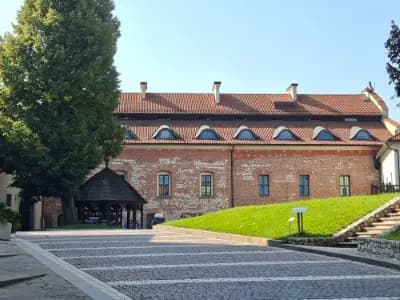
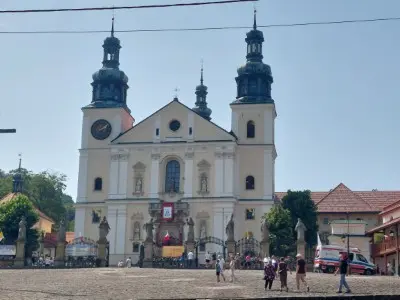
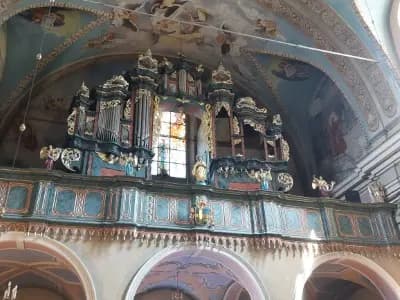
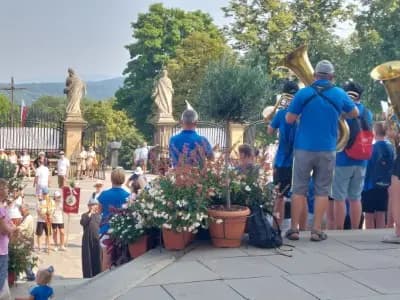
Our plan for the day was simple enough - a visit to the Benedictine Abbey in Tyniec, perched on a limestone hill above the Wisła River. The abbey, founded in the 11th century, is the oldest of its kind in Poland and has been a spiritual centre for centuries. We arrived early, well before the first guided tour at ten o’clock, only to learn that it had been booked for a private group. That small setback turned out to be a blessing in disguise. With time on our hands, we explored the monks’ shop, where shelves were lined with honey, herbal teas, preserves, and even monastery-made wine. A small museum nearby offered a glimpse into the abbey’s long history, complete with ancient manuscripts and relics of daily monastic life. When the tour finally began, it was worth the wait. Our guide shared stories about the Benedictines’ traditions, their role in Polish history, and how the abbey survived wars, plunder, and the passing centuries. Afterwards, we took short walks along the riverbank, hoping to capture the perfect photo of the abbey’s towers. Since our Tyniec adventure finished quicker than expected, we decided to extend our “religious day” with a trip to Kalwaria Zebrzydowska, a UNESCO-listed pilgrimage site. The vast complex, with its Basilica of Our Lady of the Angels and Bernardine Monastery, was alive with movement. Pilgrim groups made their way up the paths towards the church, some singing, others accompanied by brass bands bravely attempting religious psalms - more enthusiastic than harmonious. The scene had a slightly surreal quality, almost like something lifted from Fellini’s Amarcord. Inside the basilica, devotion and commerce blended seamlessly. You could purchase blessings, arrange to have your name mentioned at mass, or unburden yourself in confession - each service with its own practical price tag. On the way back to the lodge we returned to earthly needs, stopping at a supermarket to restock supplies. The day closed in familiar fashion: dinner, laughter, and another round of Trivial Pursuit. It had been a curious mix of spirituality, history, and everyday pleasures.
17-Aug-2025
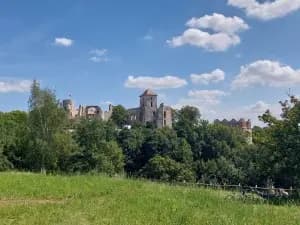
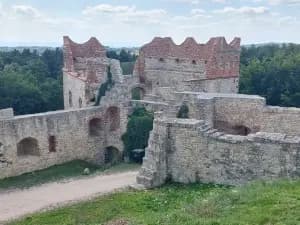
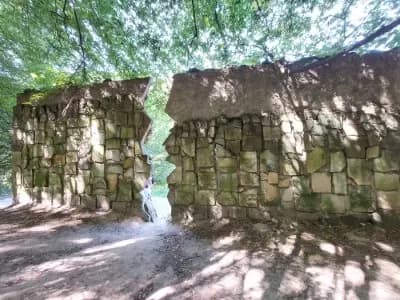
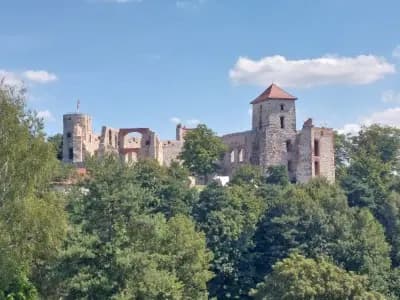
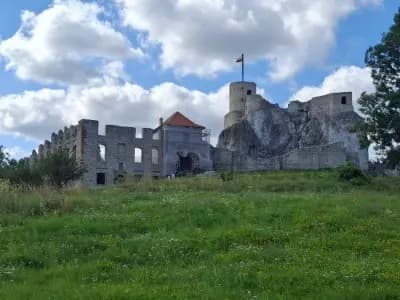
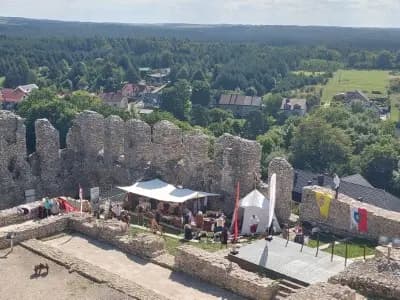
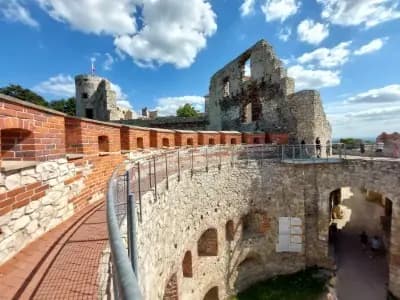
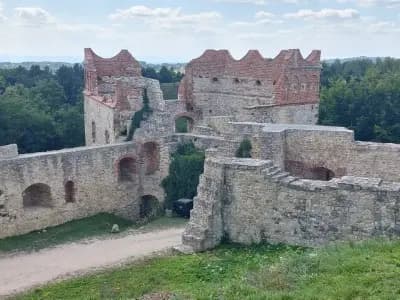
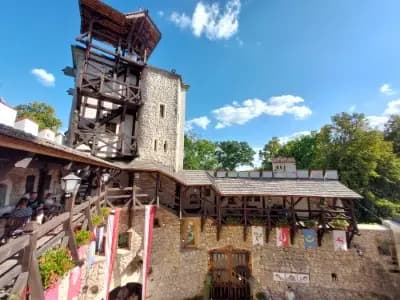
We set out for a day of castle exploring, since this part of Poland is full of them. Our first stop was Zamek Rabsztyn, sitting high on a hill with great views all around. We got lucky - the local historical society was holding a special event. The whole place was alive with people in medieval costumes, clanking armour, and plenty of laughter. Visitors were invited to try on outfits for photos, taste some simple old-style dishes, and watch small demonstrations. It felt less like a museum visit and more like a friendly village fair. At the foot of the castle we stopped by the Chata Kocjana, a small wooden house with a big story. This was the birthplace of Antoni Kocjan, an engineer who designed gliders before the war and later became a key figure in the Polish resistance. He played an important role in discovering details about the German V-1 and V-2 rockets during World War II. Standing there, it was striking to think how such a modest home could be connected to someone who made such an impact. Our next stop was Zamek Tenczyn in Rudno. Much bigger than Rabsztyn, it’s a dramatic ruin surrounded by forest. Once upon a time it belonged to the wealthy Tęczyński family and was even called the “Little Wawel” because of its size and importance. These days, many of its walls are broken and its towers partly collapsed, but the scale of the place is still impressive. Walking through, with weeds growing between stones and wide open views through empty windows, you get the sense of both its former grandeur and its slow return to nature. We finished the trip at Zamek Korzkiew, a smaller castle that has been given a new purpose as a hotel. Even so, visitors are welcome to walk around parts of it for a small fee. When we arrived, the courtyard was buzzing with activity. Tourists were sipping wine at tastings, while local artisans sold crafts and regional goods. It felt lively, warm, and welcoming - more of a community gathering than a dusty old ruin. By the end of the day, we had seen three very different sides of history: a castle alive with re-enactments, a ruin full of atmosphere, and a restored castle turned into a modern meeting place. Each stop had its own character, and together they made for a fun and memorable journey through the region’s past.
18-Aug-2025
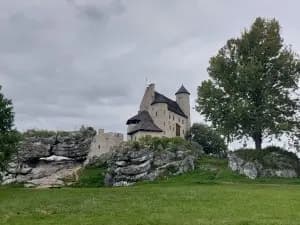
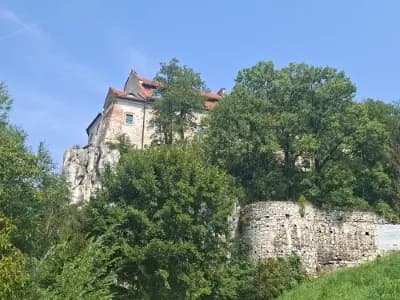
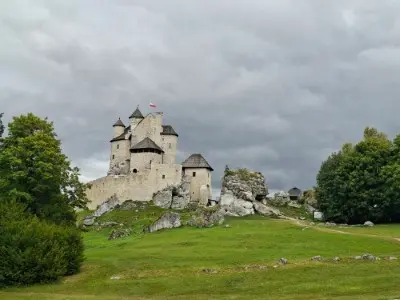
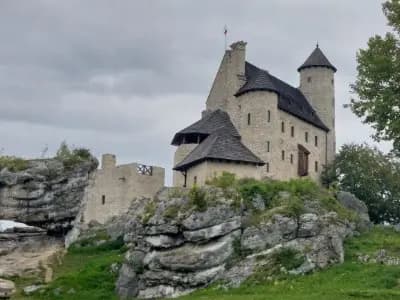
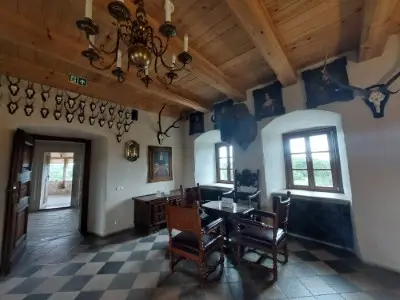
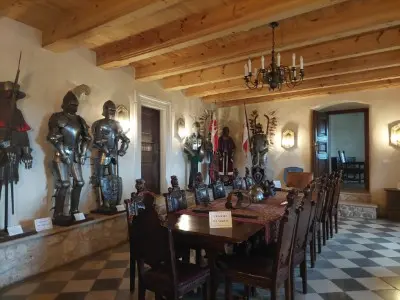
It was time to say goodbye to Jane and Bogdan, who set off early for Warsaw. We lingered a little longer, tidying up and slowly getting ourselves ready for the next leg of the journey - this time with Kasia and Leszek, who kindly offered not only a lift back to Bydgoszcz but also an invitation to stay with them for a couple of days. Since the drive was long and promised to be uneventful, we decided to break it up with a stop at the Royal Castle in Bobolice. Perched on a limestone hill, the castle looks straight out of a fairytale. Built in the 14th century by King Casimir the Great, it once formed part of the famous “Eagle’s Nests,” a chain of fortresses guarding Poland’s southern borders. For centuries, though, Bobolice was little more than a ruin - weathered by wars and time, surrounded by stories of ghostly ladies and secret tunnels. Its fortune changed when Senator Jarosław Lasecki took on the task of restoring it. Thanks to his vision and persistence, the castle has been rebuilt to its former Gothic glory. Walking through its rooms and climbing its towers, with the Jura spread out below, it’s hard not to be impressed. Back on the road, Kasia and Leszek shared the driving until we reached their home. A relaxed dinner, cooked by Kasia, and some excellent Polish jazz around the table was the perfect way to end a long but memorable day.
19-Aug-2025
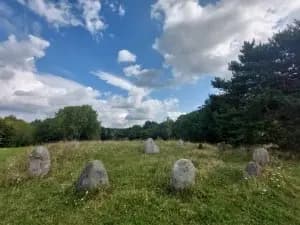
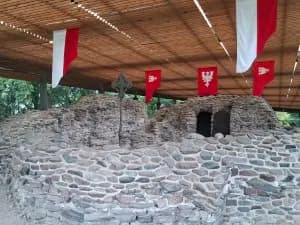
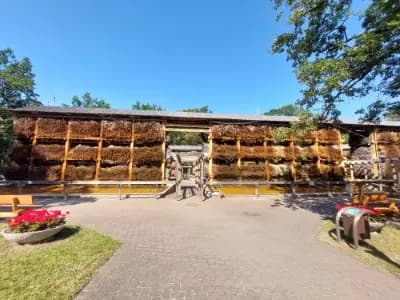
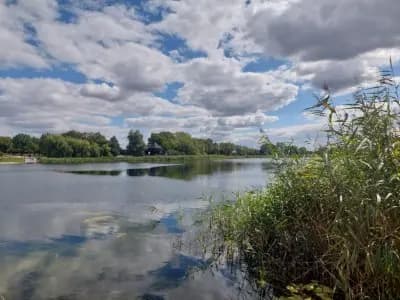
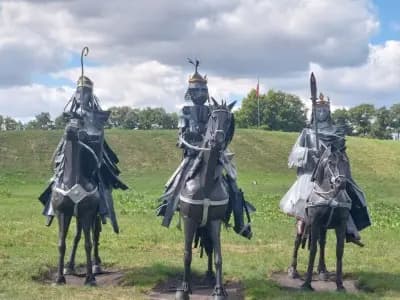
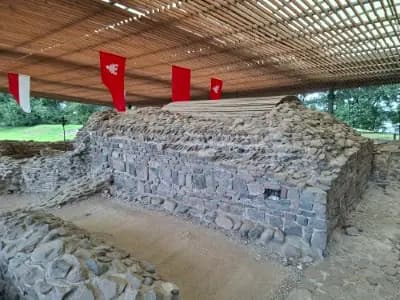
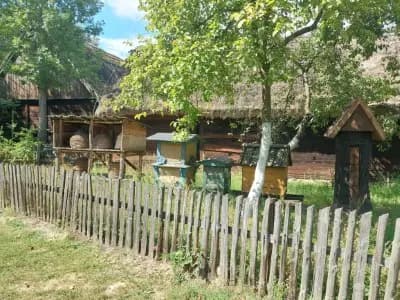
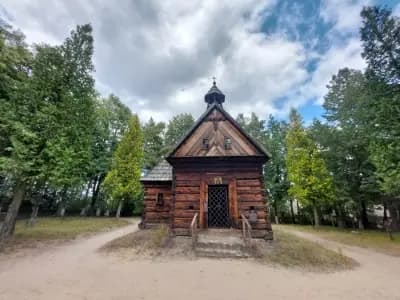
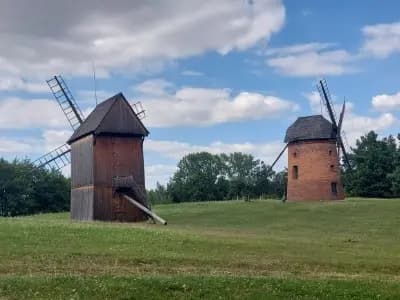
The morning drive took us to Lake Lednica, one of the most important places tied to the birth of Poland. A small ferry carried us across to Ostrów Lednicki, an island that, at first glance, seems quiet and almost ordinary. Yet more than a thousand years ago it stood at the heart of early Polish power. Archaeologists believe it was one of the main residences of the Piast dynasty, with traces of a ducal palace, chapels, and fortified walls still visible today. It was here, or so many historians argue, that Mieszko I, the first ruler of Poland, accepted baptism in the year 966. Known as Chrzest Polski, this moment is often seen as the symbolic founding act of the Polish state. By embracing Christianity, Mieszko not only united his diverse lands under one faith but also secured Poland’s place within the Christian kingdoms of Europe. Standing on the island, surrounded by fragments of stone walls and looking out over the lake, it is easy to imagine the weight of that decision - a choice that shaped the country for centuries to come. From the island we continued to the Wielkopolska Ethnographic Park in Dziekanowice, an open-air museum that brings more recent centuries of Polish life vividly to life. Spread across green fields are dozens of wooden buildings brought here from villages around the region -cottages with low thatched roofs, sturdy barns, graceful windmills, even a small wooden church complete with its spire. Each building is furnished with traditional household items: clay stoves, spinning wheels, painted furniture, and folk decorations. Walking the paths feels less like visiting a museum and more like strolling through a village where time has stood still. It’s a place that reminds you that while rulers and wars shaped the country’s history, everyday life - families, farming, faith, and celebrations—was carried on in homes like these. By the time we returned to our hosts’ home, the day’s journey had given us a deeper sense of Poland’s beginnings - how the choices of one ruler could alter the course of history, and how the quiet rhythms of village life carried that history forward. The evening was a simple one, marked by a homemade dinner by Leszek and watching a semi-horror movie on Netflix, but it felt like the perfect conclusion to a day rooted in the stories of Poland’s past.
20-Aug-2025
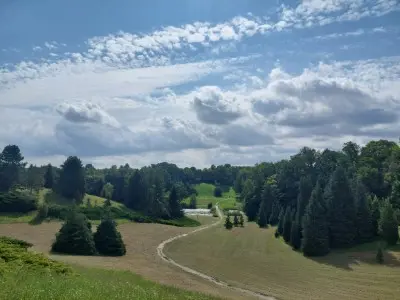
Our last day together was as gentle as the whole trip had been. We started with a leisurely walk in Myślęcinek Leśny Park, a stretch of green that feels like Bydgoszcz’s own little countryside. The paths were easy, the air fresh, and it gave us a chance to stretch our legs without any rush. For lunch, we stopped at Restauracja Sielsko Smaki Regionu, where the name says it all - simple, regional flavors served in a pleasant setting. Back at Kasia and Leszek’s place, we rounded things off with a proper cup of coffee. Then it was time for the train to Gdynia, waving goodbye to our wonderful hosts. And just like that, our little escapade with our Kiwi friends came to a warm and happy close.